Sujata Massey: The Widows of Malabar Hill
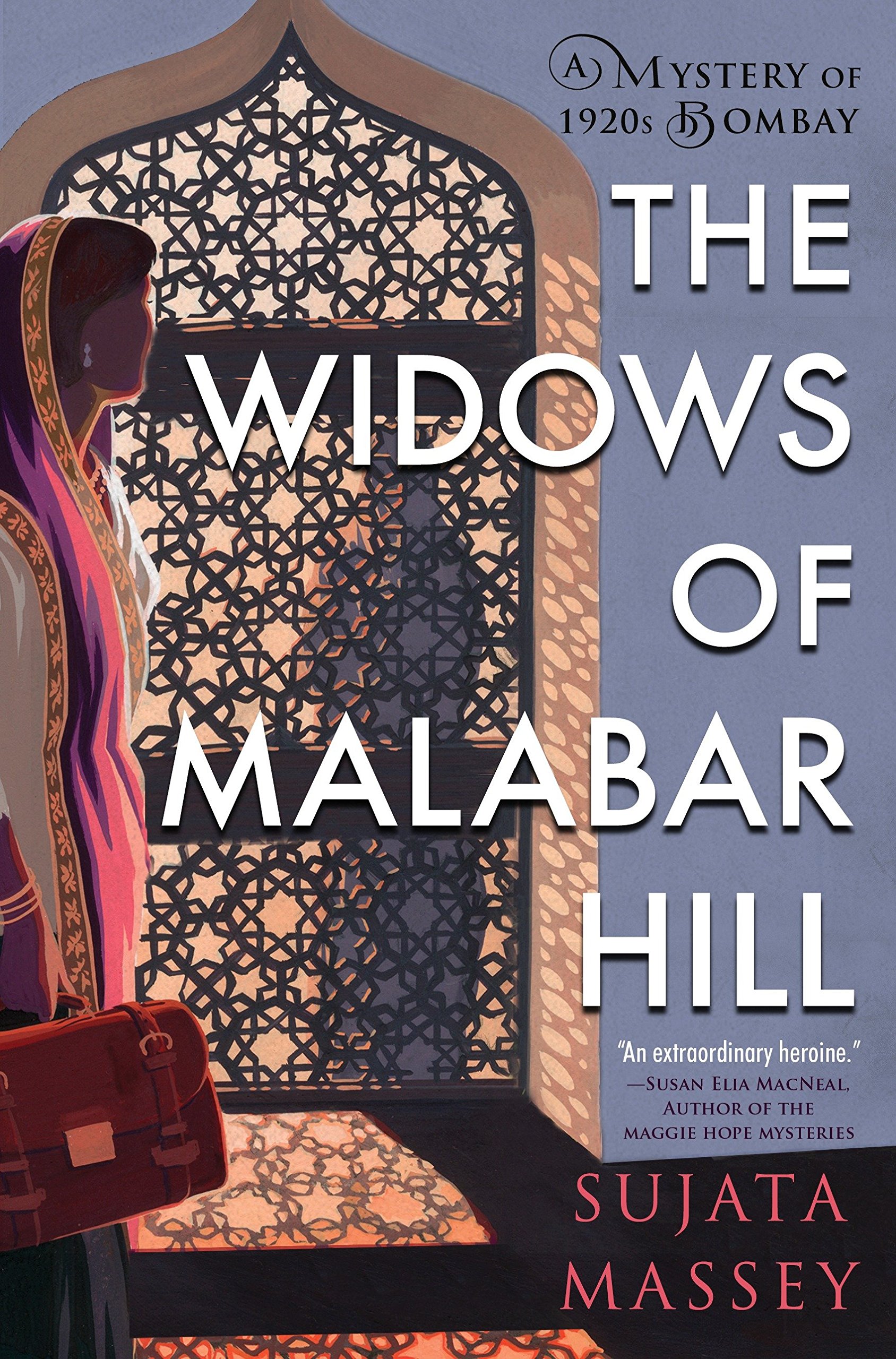 I was a totally geeked out fan of Sujata Massey’s Rei Shimura series about a Japanese American antiques dealer living in Japan. The books became progressively better and better as the series went forward, and Massey has apparently brought all the knowledge and expertise gained in writing those eleven books to good use in delivering this bravura work of historical fiction.
Set in 1920’s India, young Perveen Mistry is a lawyer – extremely unusual for the time and place – working for her father’s law firm, and though she’s not allowed to argue cases in court she can do all the research and contract work needed by the firm. Coming across her somewhat sparsely populated desk is the case of a will for three widows who were married to the same man. Their male agent has submitted documents stating that the women want to give up their inheritance and donate it to a charity instead, and the document is signed by all three.


 This is a lovely series, full of energy and insight. This installment, set during the election season of 1838 in Springfield, Illinois, follows the story of a man shot during the 4th of July fireworks and his subsequent trial, where his defense is taken on by Abraham Lincoln. The two central characters in this series are Joshua Fry Speed, known to history as Lincoln’s best friend, and Lincoln himself.
 It’s 1942, and SOE agent Maggie Hope is stuck in the wilds of Scotland, essentially on a time out from the war. She and her fellow inmates on the Isle of Scarra are sequestered there because they know too much or seem to be in danger of spilling what they do know. Maggie, who was whisked to Scarra fresh from a Gestapo interrogation in Paris (The Paris Spy), is resentful she’s not doing her bit for the war effort. Her fellow inmates have all been traumatized by their war experience in various ways, but all of them feel the same as Maggie. Unfortunately, news of the war is almost non-existent and contact with anyone back home is completely non-existent.
 This kick ass book features ladies’ maid Jane Prescott, who happens to be working for the newly wealthy and somewhat clueless Benchley family when a murder explodes the family’s world. Jane has more or less taken the Benchley girls under her wing. Their mother is a feckless household manager and the girls, Charlotte, beautiful and headstrong, and Louisa, plain and shy, welcome the kind of insider society knowledge Jane possesses after working for various wealthy families. It’s 1910 and a good marriage for each girl is uppermost in their minds – and in the mind of their mother.
 As Nancy Herriman proved with her books set in 1860’s San Francisco, she is an able and entertaining storyteller, no matter what the era. She’s changed her setting to Elizabethan England, and given readers Bess Ellyott, a widowed herbalist living with her brother. She’s fled London after the suspicious death of her husband and finds herself attempting to comfort her distraught sister, who insists her husband is missing.
 The second novel in Laura Joh Rowland’s Sarah Bain series, this one has no need to establish character and setting. It just takes off. Sarah, a photographer, is now working with her friend Lord Hugh as a private detective with a minimal amount of success so far. As the book opens, the two are on the trail of an adulterer, who they follow to the Crystal Palace in hopes of catching and photographing him in a compromising situation. This part of their scheme goes well, and the two take off when the man spots them and chases them off.
 The third novel in Deanna Raybourn’s delightful Veronica Speedwell series finds Veronica busily at work with her buddy, Stoker, sorting donated artifacts for a proposed new museum sponsored by their patron Lord Rosmorran. They live on his estate and Veronica is also able to pursue her own passion, butterflies. Set in 1888 London, the whole country is in the grip of Egyptology, as fabulous artifacts and tombs were frequently being unearthed by wealthy British who brought them back to England for display and sale.