William Kent Krueger: God’s Country

Cork O’Connor #22
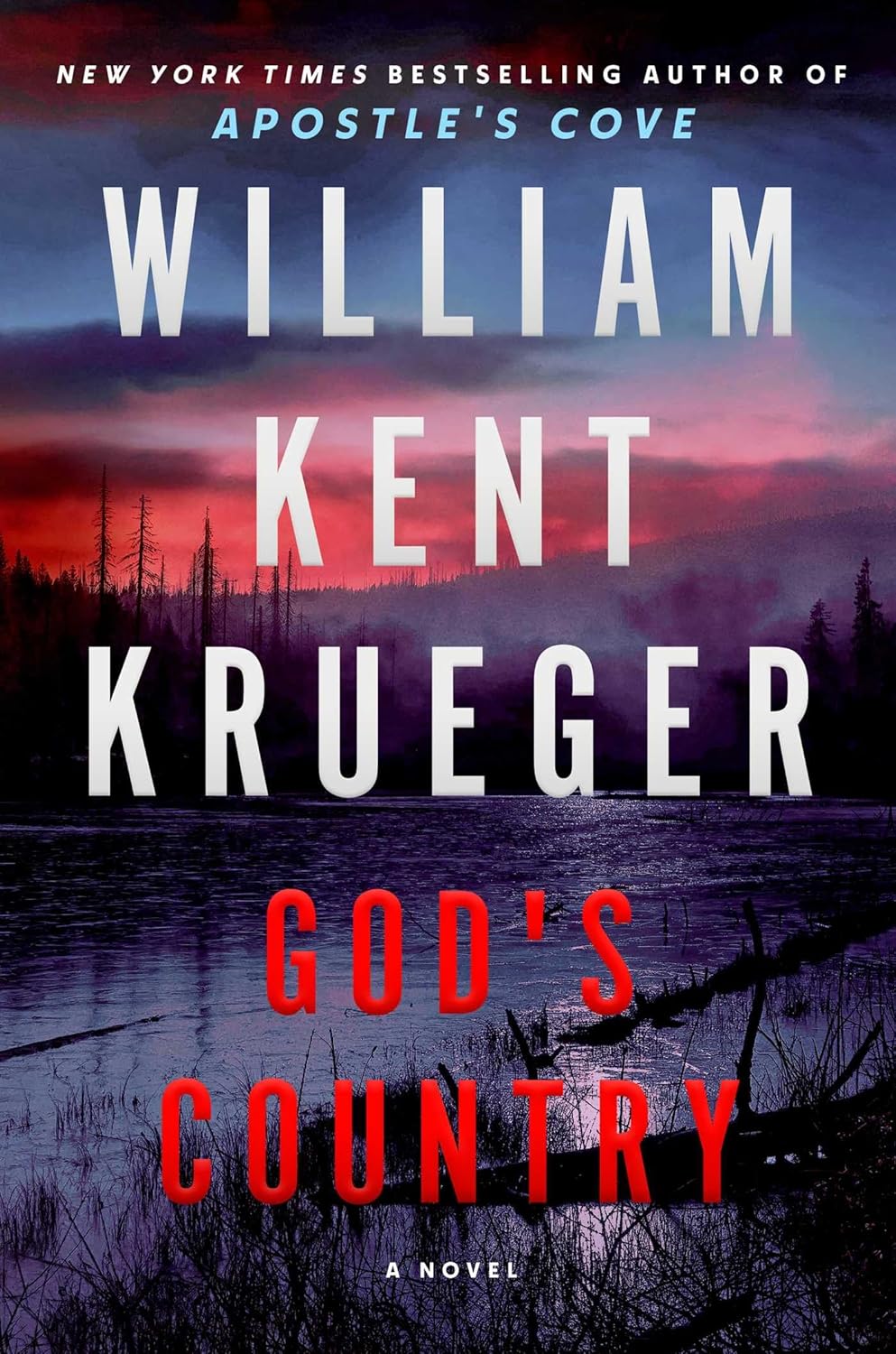
There are many different kinds of mysteries, and the really good writers know how to write a few of them – why, even Dame Agatha cranked out a series of spy thrillers doing her bit for the war effort. When William Kent Kruger uncorked (so to speak) his fantastic first novel Iron Lake, a modern whodunit, he achieved instant acclaim, and he impressively followed it up with Boundary Waters, which was much more of an adventure tale. Twenty-seven years later, God’s Country returns to that territory, literally and figuratively, with series hero Cork O’Connor once again setting out into the wilderness to confront the monsters who haunt the shadows, while also forced to deal with the darkness within that he summons to defeat them. read more

William Kent Krueger: Spirit Crossing

Cork O’Connor #20

I have read every Cork O’Connor book to date, and it’s a series that’s managed to stay fresh and entertaining through it’s now long (and classic) run.  The books follow Cork as sheriff in Aurora, Minnesota, as he raises his family, loses his wife, remarries, and leaves law enforcement and becomes a private investigator. However, I don’t think of these books as P.I. novels.  I think of them primarily as family novels.  I think the combination of Cork’s family story and the action and mystery Krueger brings to the table make these appealing to both male and female readers, something not always true in mystery novels, which tend to skew toward one gender or another in terms of readership. read more

William Kent Krueger and the Enduring Legacy of the series detective

Many many long moons ago, Sir Arthur Conan Doyle not only created Sherlock Holmes, he created the concept of “a single character running through a series” a.k.a., the series detective.  While of course the stories themselves are wonderful, the creation of this series character has had perhaps the longest shadow over detective fiction, and, I would argue, the most enduring.  Series detectives are not just appreciated, they are beloved.  After a certain point in a series, the point is not really the story, the point is what is happening to the character.  They have their own lives, something which, I imagine, might be irritating for their creators (I know it was for Conan Doyle and Christie).  They can hardly be killed off, Sherlock Holmes being the most outstanding example as pastiches featuring Holmes outnumber Conan Doyle’s actual work. read more