Hill House Vintage #2
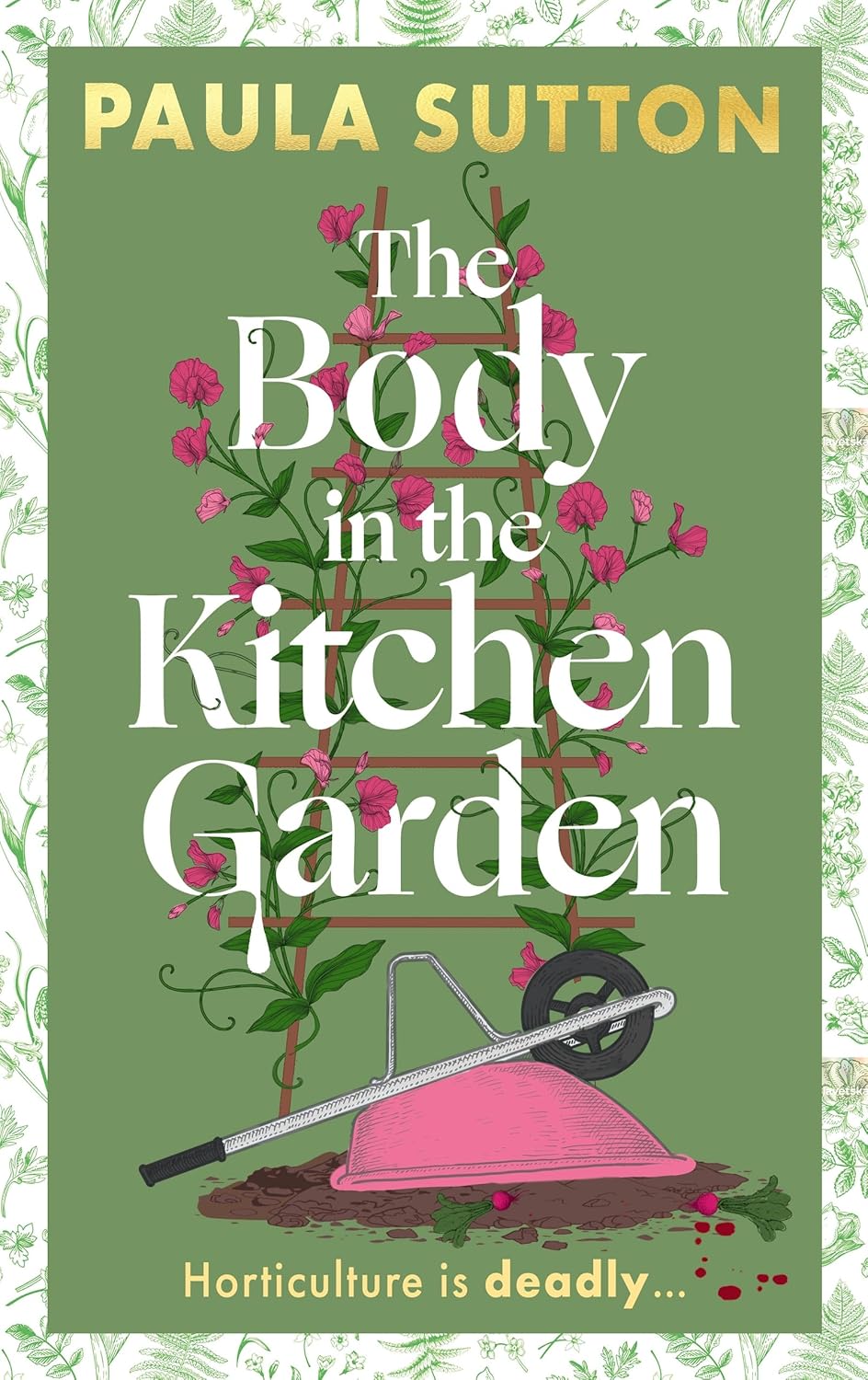 Ninety-six years after Miss Marple made her first appearance in the village of St. Mary Meade, The Body in the Kitchen Garden demonstrates that the gentle English village mystery genre is still going strong. Like Agatha Christie, the legendary creator of Miss Marple, modern practitioners of the British village mystery- writers like Connie Berry, G.M. Malliet, and most recently Katarina Bivald – find the depths of human emotion and depravity lurking not far below the surface of this seemingly idyllic setting. Sutton has further updated the formula with the provocative move of having her detective be the only black woman in town.
Like her creator, main character Daphne Brewster is a vintage furniture and architecture enthusiast. (Sutton is a popular lifestyle influencer under the moniker @hillhousevintage). Indulging in her books or Instagram posts transports the lucky reader or viewer into a world of British Village porn, where all the rickety chairs are beautiful, the beds are covered with lovely, faded spreads and the wallpaper is, of course, William Morris. This is more of a sidebar in the books, though Daphne owns a shop where she repurposes and sells old things, a pursuit she finds surprisingly lucrative.
Daphne has escaped London with her husband, adorable kids and cute dog to the village of Pudding Corner, whose peaceful and quiet facade, as any mystery reader knows, will soon be shattered by murder. One unspoken rule is violated when early on Sutton reveals the identity of the killer in the previous series installment – as I’d read it myself I was able to move on, but if you haven’t yet checked out The Potting Shed Murder you might want to pick it up first to avoid the spoiler.
It all starts innocently enough when Daphne is approached by the soon to be lady of the local manor and asked to help her repurpose and reclaim enough rooms in the old place to turn it into an Airbnb she hopes can pay for its own upkeep. It’s Daphne’s dream job, and she can’t wait to dive in with the meek Helena, the unlikely fiancée of Sir Hugh Darlington, lord of the manor.
Daphne and Helena work through the rooms, finding plenty to both repurpose and sell and even make a start on stripping the walls. Meanwhile, things in Pudding Corner take a dark turn when one of the town stalwarts, general store owner (and inveterate keeper of facts about everyone in town), is found dead one morning after a fall from her ladder. Her sister, sure it’s not an accident, withdraws from the world, and Daphne proves to be a good neighbor, keeping an eye on her and trying to coax her back out into the world.
Meanwhile not only are there village youths hanging around on the village green and perhaps stealing things around town, but also a homeless man lurking about, a rare sight in a remote rural village. Mysteriously, he’s ultimately found dead in the garden of the manor house, where he had apparently been sleeping rough.
Daphne can’t help but be drawn into sleuthing, feeling she can’t leave the meek Helena on her own after the corpse is discovered on her premises. As usual the local constable warns the nascent detective off to no avail, but what follows is less traditional, and it’s here that Sutton takes a deep dive into the psychological underpinnings of her characters, both fleshing them out and providing complex motivations. While I found this enjoyable, I also found the change in tone a bit unsettling, even starting to think that maybe she should stick to either a traditional or a psychological village cozy (with practitioners like PD James, Ruth Rendell, and Deborah Crombie, to name a few, pioneering the latter).
However, this remains a charming series, with a great setting and populated with terrific characters and telling details of village life. To be clear, I want to make it clear that I’m very much looking forward to reading the next book. I’m also wondering how Daphne can stay in shape after eating so much cake! Sutton makes it sound so delicious that you might be inspired to savor a slice yourself when you close the last page. — Robin Agnew