Ali Dawson #2
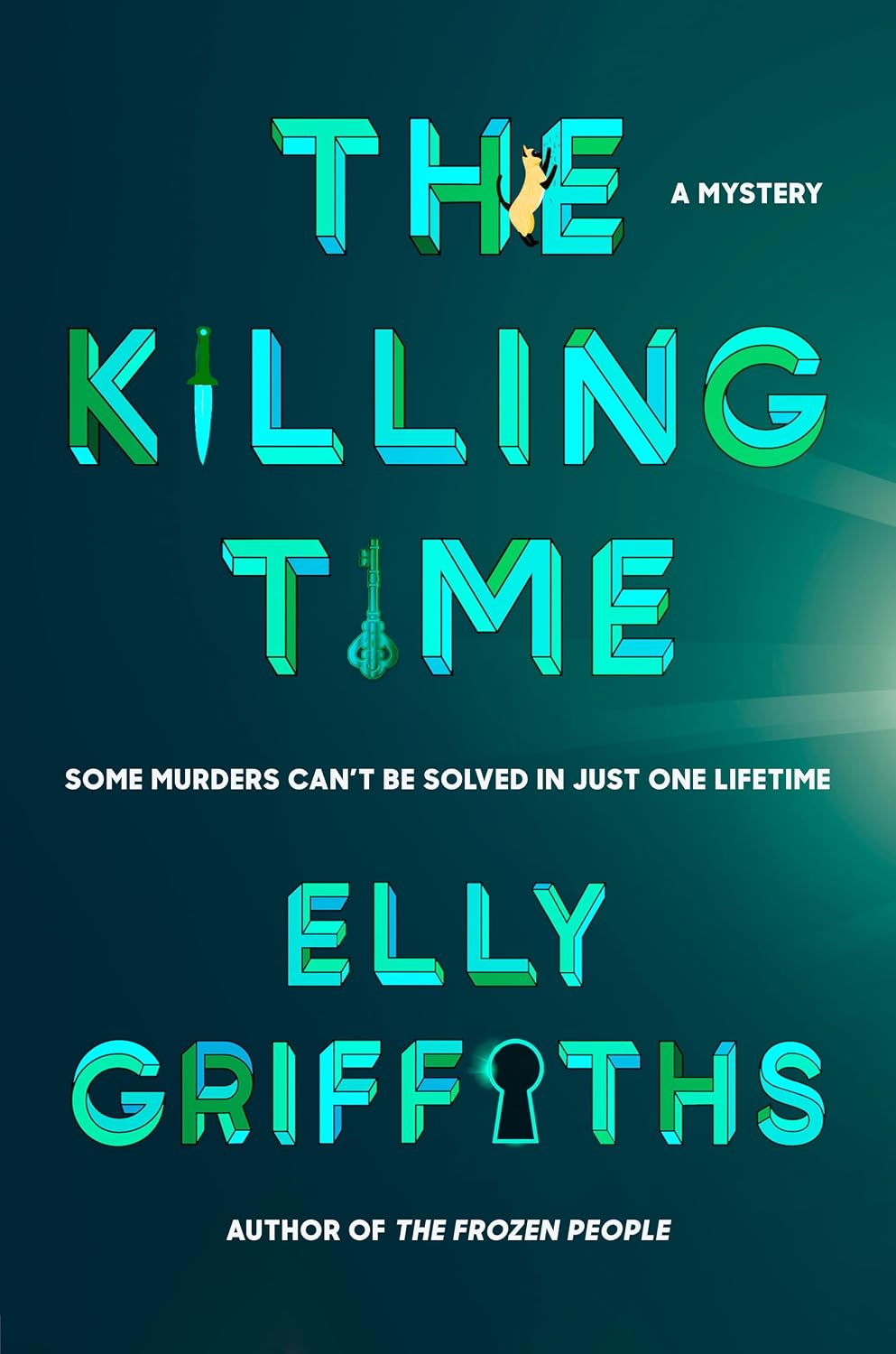 Since finishing up her beloved Ruth Galloway series, Elly Griffiths has been letting her freak flag fly with wonderful results. In this latest series, her main character, Ali Dawson, is a detective in the cold crimes division: cases so cold, they’re frozen. The unit operates out of a decrepit building in London on Eel Street, with a mysterious upper chamber called “Pevensie,” which, as every Narnia loving kid knows, was the last name of the family in the books. It’s into this air of slight unreality that the reader finds that the detectives in this cold case squad can time travel.
When I first heard about this aspect of the books, I almost didn’t read them, but I should have had faith in the greatness that is Griffiths’ storytelling. To me, she’s one of the greatest pure storytellers alive, and these books prove my point. The time travel element is folded naturally into the stories, enriching the plots. There are crimes in the past as well as in the present that must be solved, and in another tribute to Ms. Griffiths’ skill, these crimes are all related to one another.
In the first book in the series, The Frozen People, Ali chooses to go back to 1850s London. It’s all the more jarring as she goes back to the same neighborhood where she lives in the present. She must learn to deal with being a servant, using a chamber pot (and emptying it), and wearing a corset. (As it’s made clear in this novel, when there’s a heat wave in 1851, corset itch was real.) In this book, while she does again end up in 1851, she’d meant to only go back a week for the quotidian reason of wanting to close the cat flap in her kitchen, preventing her cat’s escape. She misses him dreadfully.
When she returns to the past, she finds another person from the cold case squad still there who is now happily living in 1851. This woman scoops Ali up and gives her a very different experience than the one she had the first time. Rather than a serving as a maid, Ali is now a guest in an upper class home. While she finds it more pleasant, she’s wracked with guilt as she knows the amount of labor the servants are performing to keep her in comfort.
The thread that ties past and present turns out to be a man who claims to be able to fly and who can read minds. Ali has seen one of his present day shows where he references an influence, and similar figure, in Victorian London. Are they scam artists? Do they have actual powers? Ali is sceptical and when there are deaths – all of them, in this instalment, in the present – they are still tied to the past as Griffiths performs her own writerly sleight of hand and brings Madeline L’Engle’s “wrinkle in time” to an even fuller expression. The past seems folded into the present, and vice versa.
What really makes these novels extraordinary is the vivid depiction of 1851 London. I read many, many historical novels, and I love them, but Griffiths books really make you feel, as a reader, that you can perhaps begin to grasp and almost experience the way an ordinary person might have lived in the past. If that’s not time travel, I don’t know what is. The whole is wrapped in a mesmerizing story that was the icing on this very particular cake. You’ll have to read the book and discover its delights for yourself. — Robin Agnew