Cork O’Connor #22
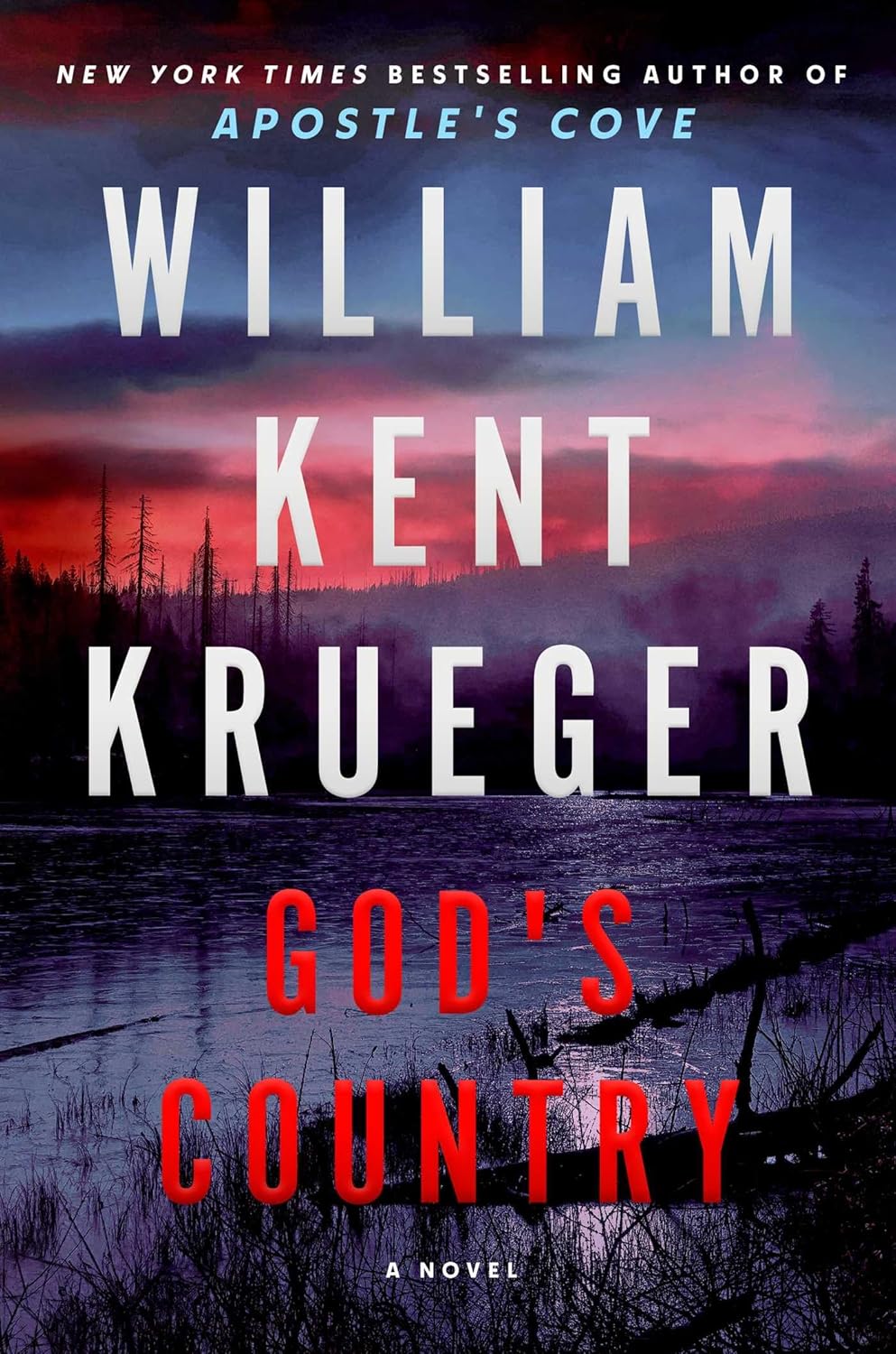 There are many different kinds of mysteries, and the really good writers know how to write a few of them – why, even Dame Agatha cranked out a series of spy thrillers doing her bit for the war effort. When William Kent Kruger uncorked (so to speak) his fantastic first novel Iron Lake, a modern whodunit, he achieved instant acclaim, and he impressively followed it up with Boundary Waters, which was much more of an adventure tale. Twenty-seven years later, God’s Country returns to that territory, literally and figuratively, with series hero Cork O’Connor once again setting out into the wilderness to confront the monsters who haunt the shadows, while also forced to deal with the darkness within that he summons to defeat them.
This is no pale reflection, however, because, as we have all witnessed, Kent has built on his great beginning to become one of the preeminent mystery writers of our time. In this book he takes the familiar adventure tropes and adds the kind of spiritual profundity that made his masterpiece Ordinary Grace such a resonant success.
The story begins with the gathering of the larger O’Connor clan – Stevie! Rose! – and the reader wants to hug each one as they appear at the door. The visit to the ageless native mystic Henry Meloux waits for the next day, and, as the O’Connor men are planning a male bonding excursion to the Boundary Waters, he delivers his usual oracular warning which, of course, will only reveal its profundity after the smoke has cleared.
The shadows begin gathering as soon as they enter, with Cork noticing a troubling lack of respect for God’s country from a preceding group of visitors, capped by the ultimate insult, the corpse of a man who has been tortured, murdered and dumped like trash. Immediately Cork sends the rest of the family home, leaving him the classic lone hero. In an adventure tale, there’s no mystery as to the identity of the bad guys, and although Cork doesn’t know their real names until the end, he gradually becomes more than familiar with their rotten souls, a corruption that threatens to become contagious.
Narrator Cork often refers to the “Great Mystery,” the inscrutable force that orders and disorders the universe, as the reason for various happenings in the narrative, but if you think about it, it’s really more the “Great Mystery Writer” Kent who is pulling the strings. There may be a few improbabilities along the way, but the suspense develops so relentlessly that they fly right by.
Why separates God’s Country from the usual wilderness or state park mystery is Kent’s poetic appreciation of nature as well as the very real spirituality that makes the book profound. Rather than the savage kill ‘em all mentality of most narratives like this, Cork realizes that what happens in the wilderness often returns home to haunt even the survivors. He knows full well that self knowledge is hard earned, that it’s easy to say that love and compassion are the basis of true spirituality, but that living that truth is a much different matter. Cork is a true Irish-American/Native American mensch, and although the bad guys are firmly defeated, I really enjoyed the somewhat open ended conclusion. We might not ever find righteousness – what matters is that we continue to pursue it. — Jamie Agnew