Eliza Hamilton #2
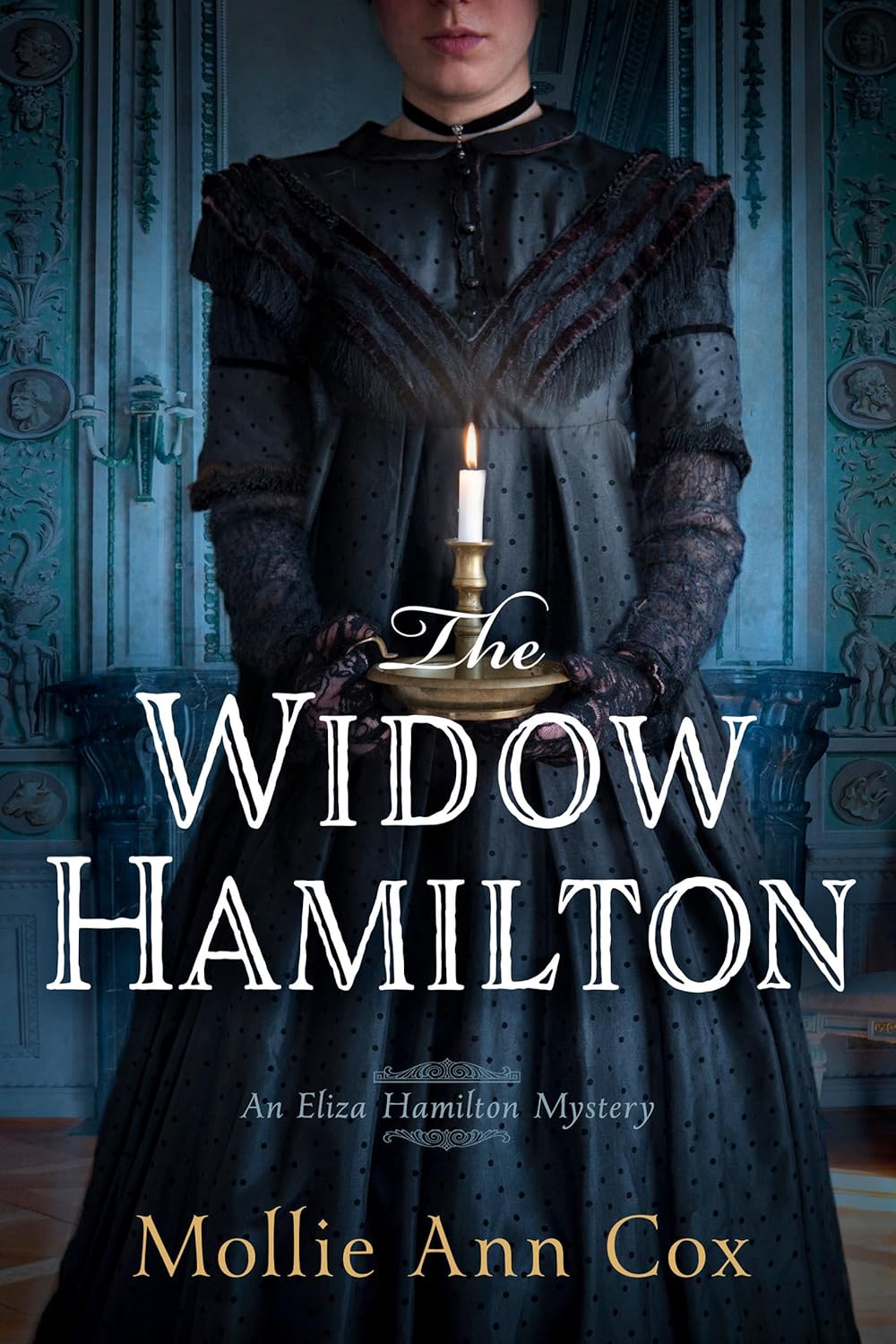 I had never given much thought to what became of Alexander Hamilton’s widow, but Mollie Ann Cox is here to provide readers with the details of this remarkable woman’s life. Though she wasn’t actually a sleuth as posited here, she did live a long life with her many children, founded a large orphanage, and dedicated much of her life to preserving her husband’s legacy, organizing his papers and keeping him in the public eye. Along with Dolley Madison and Louisa Adams, she raised the funds for the Washington Monument.
But back to this novel – in this story, Eliza has only been a widow for a year, has a houseful of children, and is worrying that the home she built with Alexander will be repossessed by the bank. Meanwhile, she continues visiting friends of hers – women who live together, making a living with their sewing (lacemaking, embroidery, quilting, etc.). Two of the women have disappeared, and one of them is found dead, the other remaining missing, The woman who is the defacto head of this all female household, Alice, is not letting things lie, however, and neither is Eliza, who uses her position to insist that the police investigate.
One of the things I appreciated about this book was simply the portrayal of women’s lives. Eliza is not ordinary herself but like many a mystery heroine, she can straddle several social and economic groups, with the difference that when she is introduced as “Mrs. General Hamilton” she is granted respect, an audience, and sometimes, answers. Helping her in her sleuthing is her sister Angelica, who is a bit more bold than Eliza.
As the two women visit the apothecary where the women were last seen, the constabulary, and the home where the women sewers make their living, a portrait of early New York City is formed: a small town growing into a large one. Eliza’s sons bemoan the fact that they used to know every alleyway, but continual change and building is changing the town where they grew up. They are some help in the investigation but most of it belongs to Eliza.
The investigation leads to the discovery of several nefarious activities that find Eliza charging all over town, to the dismay of her coach driver, and to the dismay of her children who are merely wanting to celebrate Advent and Christmas as a family. This dynamic is as powerful in the 1800’s as it is now. It’s really the characters and the portrayal of their lives that drive the novel – the sleuthing is on the gentle side, the characters, on the memorable side.
As I read this book during a snowstorm I appreciated Eliza’s search for warmth in a cold city, and I enjoyed meeting the many women she encounters. The wrap up to the mystery is a good one and quite surprising as well, which is a neat trick for any author to pull off successfully. This is a real bit of armchair time travel. — Robin Agnew