Countess of Harleigh #9
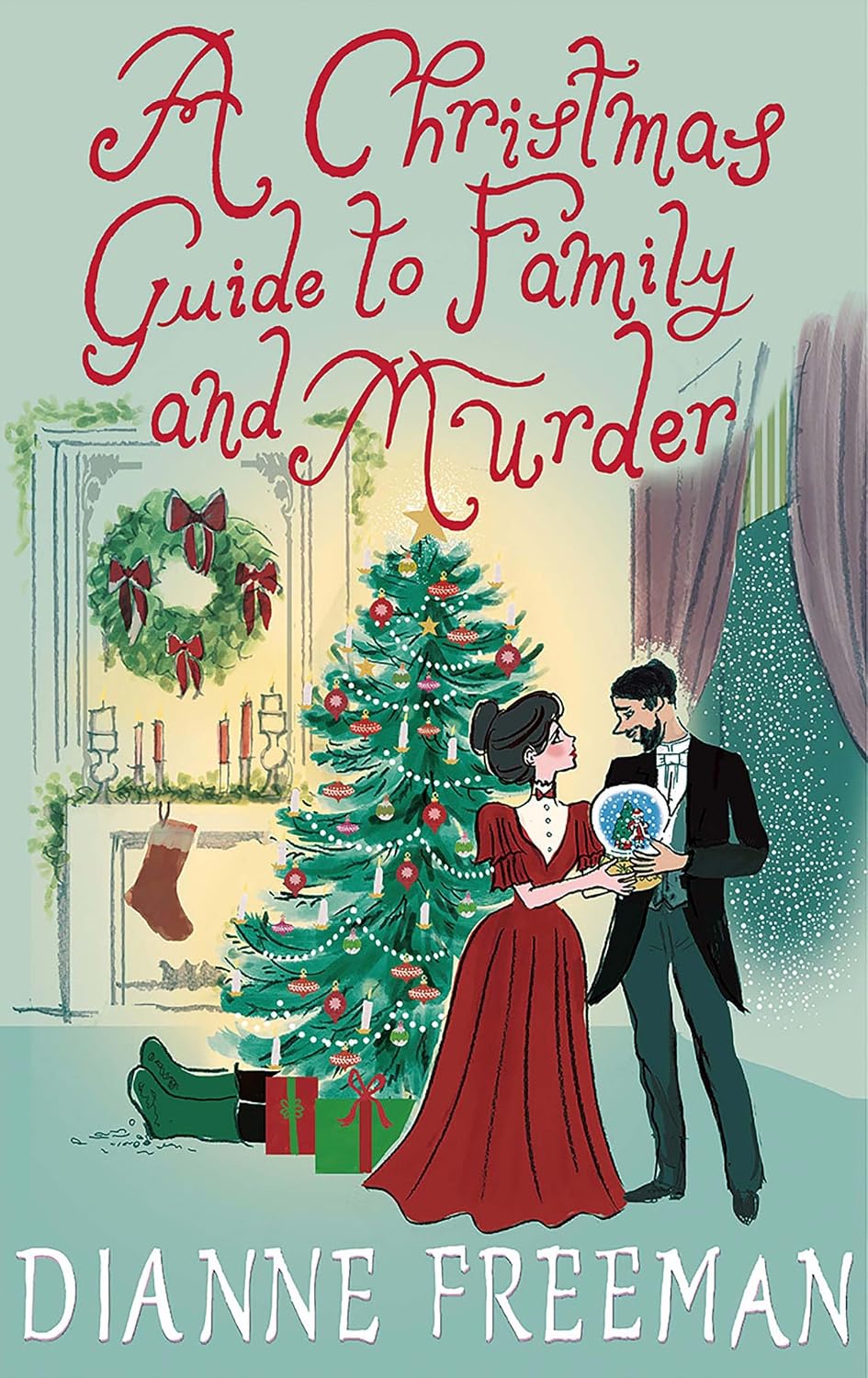 A Christmas Guide to Family and Murder is the ninth book in Dianne Freeman’s delightful series set at the turn of the 20th century, about Frances, the American-born Countess of Harleigh, and her second husband, George Hazelton, a younger son of an earl and a secret agent for the British government. The two of them solve crimes together, usually among the upper classes in London, even though the two books before this one have taken them to Paris. This novel introduces a new setting: a country estate in Norfolk. Frances is looking forward to spending Christmas of 1900 in London when she and George receive an invitation from Fiona, George’s sister and Frances’ best friend, to join her and her husband, Robert, at their estate, Hadley Grange. Rose, Frances’ nine-year-old daughter by her first husband, is excited about spending Christmas in Norfolk, as are the two most recent additions to the family: Lissette, George’s fifteen-year-old cousin and ward, and her half-sister Christine, a young woman in her early twenties. Frances’ aunt Hetty joins them as well, after indicating that things are not going smoothly between her and her suitor Gilliam, a theater manager.
The family, especially its younger members, are looking forward to seeing snow in Norfolk, while London is experiencing warmer-than-usual weather for December, and Rose is happy about spending time with Fiona’s children, Gregory and Grace. On their first night in Norfolk, the family goes to see Grace in a play of A Christmas Carol in the nearby village, and meet Fiona’s unpleasant neighbor, Dr. Penhollow. The expected snow fails to materialize. Instead, Norfolk is hit by pouring rain and a violent windstorm, which causes much destruction in the surrounding area, although Hadley Grange and the village are largely spared. George, Robert, and most of the men from the village go to help clear the roads and clean up after the storm.
The morning after the storm, after the men have left, Frances, Fiona, Hetty, and the children walk from Hadley Grange to the village and, while crossing a field, they find a dead body, which turns out to be Dr. Penhollow. There are no visible wounds on the body, so Frances is uncertain whether he was murdered or died of natural causes. But she notices tracks in the surrounding area, which would indicate the doctor was not alone when he died. Her first instincts tell her that this was murder and, of course, she’s right.
Frances is left to investigate the murder by herself, with help from Fiona and Hetty, since the police have all gone to help clear the roads after the storm. Dr. Penhollow was the coroner and the only physician in the village, and Robert is the magistrate. Only one retired policeman remains in the village. He is in his eighties and seems all too willing to leave the investigation to Frances. She sends Fiona’s footman for a physician from another village to examine the body, and the body is brought back to Hadley Grange and left in Fiona’s conservatory until the doctor arrives. Frances thinks the death is too suspicious to release the body to the family.
The children, to Frances’ dismay, are excited about the presence of the body in the house and are fascinated by the murder investigation. Their governess has given them an assignment to write a Christmas story, and they have chosen to write a sequel to A Christmas Carol as a murder mystery, where Scrooge is murdered and two detectives named Frank and Georgianna, obviously inspired by George and Frances, solve the crime. Frances is dismayed by the children’s enthusiasm for crime-solving at first, since she has always tried to shield Rose from her activities as a detective to keep her out of danger. She has always thought Rose knew little of her and George’s activities, but this has turned out not to be the case. When Rose tells her the story she and the other children have been writing, though, Frances is proud of her daughter’s imagination and cleverness.
Frances, always accompanied by either Fiona or Hetty, makes several visits to the village to question suspects. She realizes she is doing the work the police usually do, but they cannot because of the circumstances. Usually, Frances listens to the gossip among the women of the upper classes and puts the clues together from what they say, while leaving the direct questioning to the police, so this is a new approach for her, and she is not happy with the results. The villagers are understandably offended by being accused of murder. It turns out that no one liked Dr. Penhollow, except his grieving widow, Ada. But is her show of grief genuine or an act? Even his stepdaughter, Beatrice, the vicar’s wife, hated him because he wouldn’t let her marry the man she loved and instead forced her to marry the vicar. Frances soon finds that the Penhollow estate is entailed on the doctor’s brother, so Ada will inherit nothing and appears to have no motive, while the brother, who has a very strong motive, didn’t arrive in the village until after the doctor was murdered.
There are other suspects besides the members of Dr. Penhollow’s family, including a man who thought he should have been appointed coroner instead of the doctor. A woman who was a patient of Dr. Penhollow died after taking a medicine he gave her for a lung infection. Has her family taken revenge? But the woman died quite a while ago, so, if they did, why have they waited so long? It seems he was not even a good doctor, and most of the villagers have been going to other villages for their medical needs. Then Frances learns from the postmistress, who is the village gossip and was a good friend of the dead woman, that Dr. Penhollow had been having an affair with the patient who later died, which would give his wife a motive, after all.
While Frances is trying to put the pieces of the puzzle together, the young physician, Dr. Bertram, arrives from the other village and examines the body. He discovers that Dr. Penhollow was poisoned, which Frances had suspected, since there were no wounds. Strangely, the dead man was wearing a pair of boots that were too large for him. Could they have belonged to the killer? Frances tries to discover how the poison was administered, and, of course, who the killer is, before the Christmas celebrations can begin.
I enjoyed this book very much, and it is always a delight to spend time with Frances and her family. We see more of the younger generation in this book than in some of the others, and there are possible love interests developing for the two young girls, Lissette and Christine, even though, as Frances points out, Lissette is only fifteen and too young to be in love. She seems to be developing a crush on Dr. Bertram, even though Christine is closer to his age. Aunt Hetty’s romance with Gilliam takes an interesting turn, which I will not spoil here. This book represents something of a departure from the rest of the series because of the new setting, and the new role for Frances in questioning suspects. Also, George is absent for most of the book, so we don’t have the witty dialogue between the couple which is such an important feature of the other books. I admit I missed it, but solving a crime in George’s absence emphasizes Frances’ strength as a character. I did not guess who the killer was until the end. In fact, I was sure it was a completely different person, and then there was a twist I didn’t see coming.
This novel can stand alone, but I would recommend beginning the series with the first book, A Lady’s Guide to Etiquette and Murder, to follow the characters and their relationships, and see how they develop. The series will appeal to fans of Tasha Alexander, Anna Lee Huber, Clara McKenna, and Alyssa Maxwell. Dickens fans will especially love the references to A Christmas Carol in this one: the village play at the beginning of the book, as well as the story the children are writing. The victim in this book, Dr. Penhollow, is something of a Scrooge: he dislikes everyone, and no one much likes him. But, as with Scrooge, there is another side to him, and he’s more complex than he appears at first. It did seem funny to be reading a Christmas book in August, but that’s what happens with pre-publication reviews. The book is enjoyable no matter when you read it, and I expect it will be even more so for people who read it at the “right” time of year. — Vicki Kondelik