David Bell: Bring Her Home
 In suspense fiction the setup is crucial, and, as one of its finest practitioners, David Bell knows how to start his tale with a bang big enough to energize the compelling universe that follows. His latest superior work, Bring Her Home, begins with a man rushing into a hospital trying to find his daughter, frantic but at the same time desperately trying to keep himself together in midst of the bureaucratic chaos. While many other suspense writers feature impossibly virtuous supermen or bland mannequins whose features are obscured by a blinding fog of plot, Bell brings a regular but not quotidian protagonist to his tale, a guy thrust into the middle of life and death events way over his head, but who is determined to find justice for those closest to him in the best way he can.
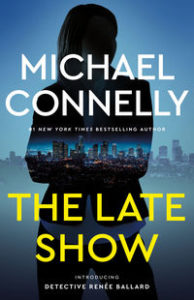 Michael Connelly has seamlessly launched a new character and series, introducing Detective Renee Ballard. Ballard works “The Late Show,” or the overnight shift, and she’s in a bit of purgatory as she’s accused her former boss of sexual harassment. When the charges went nowhere (her old partner didn’t back her up), she was booted to the Late Show, where she catches cases but isn’t able to follow them through to a conclusion. She instead turns them over to the pertinent department – homicide, robbery, etc. She’s feeling the lack of follow-through – she’s not as engaged in her job and her partner, who works the late shift to get home and care for a wife with cancer, doesn’t have the same focus she does.
 Murder with a Twist; Killer Cocktail; and A Perfect Manhattan Murder.
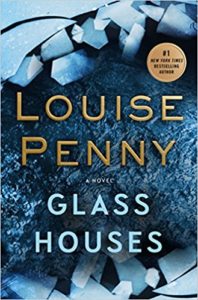 Forget retirement. Gamache is now head of the ENTIRE Surete. After the events of the last novel, Gamache has taken on corruption on a larger scale – he’s literally moved on from the academy to the world at large. Penny, as always, skillfully layers her story. In this outing, she jumps between Gamache’s testimony at a trial, a murder in Three Pines, and the Surete’s – and Gamache’s – fear of the drug crisis, specifically the opioid epidemic and how best to fight it. While Julia Keller’s new book (Fast Falls the Night) also focuses on the opioid epidemic, she goes for the personal; Penny goes for the epic. Keller’s view is far more pessimistic than Penny’s ultimately optimistic one.
 I have a real respect for writers who pull off the feat of condensing a book into the space of a single day. One of my favorite mysteries, Ngaio Marsh’s Night at the Vulcan (1951), takes place in the space of a single night, and while Ms. Keller is far removed from Ms. Marsh in time, theme, setting, and protagonist, they share a knack all good storytellers have. I think it’s a matter of pacing, the right amount of being invested in the characters, and some sort of indefinable magic. Marsh’s stories are lighter and more optimistic than Keller’s, who sets hers in a far more brutal time and place.
 Fred Vargas is an interesting combination of very traditional and very – untraditional. Her set-up is traditional – Parisian Commissaire Adamsberg has a homicide squad that breaks down in traditional police novel form, with each character in the squad adding something to the story. But Adamsberg himself is extremely untraditional, with deductive methods that border on magical realism. In this novel, the story opens with an elderly woman struggling to the mailbox to mail a letter. Alas, she collapses before she can mail it, but a good Samaritan who helped her until an ambulance arrives later finds the letter in her pocket and mails it.
 One of the things that make England such a haunted place is its sheer antiquity. The great ghost story writers of that country are often possessed by the fear that the spirits of the old, pre-Christian ways will manifest themselves darkly in our bright modern world. Such is the slowly dawning terror of Andrew Michael Hurley’s magnificent new chiller The Loney:
 I have heard the buzz about Ingrid Thoft for awhile now and finally got around to picking up this first novel in her series, and boy, is the hype justified. The central character, a female P.I. who works for the family law firm, bears some similarity to the kick-ass Kalinda on The Good Wife, one of my all time favorite TV characters. Josefina “Fina” Ludlow also has a passing resemblance to Spenser, and as this series is set in Boston, that seems only right. The family law firm is run with an iron fist by her father Carl and staffed by her high powered brothers. While Fina found the law wasn’t for her, she found investigative work was. It’s very much put to the test in this first outing. She runs a business “separate” from the family law firm, but they bring her most of her clients.
 Theresa Schwegel is a brilliant and underappreciated writer (despite an Edgar win for her first novel, Officer Down). She is a difficult writer, though, and refuses to sugarcoat anything. She also writes her novels in first person, present tense, which some people find off-putting. That said, she’s one of the more original and vivid writers in mystery fiction. Everything she writes is memorable and worth a look, and this novel, her sixth, is no exception.
 Rhys Bowen’s Lady Georgie series is about the most fun you can have “between the covers.” Ever since the publication of Her Royal Spyness (2007), Bowen has trod the delicate line between humor, character development and great plotting to provide one of the more completely enjoyable series in the mysterious universe. Lady Georgie, for the uninitiated, lives in 1930’s London and is 34th in line to the throne. She’s impoverished but does get assignments from the Queen to do a little “family” spying – at the time, Queen Mary’s greatest worry was the Prince of Wales’ relationship with Wallis Simpson.