Debut
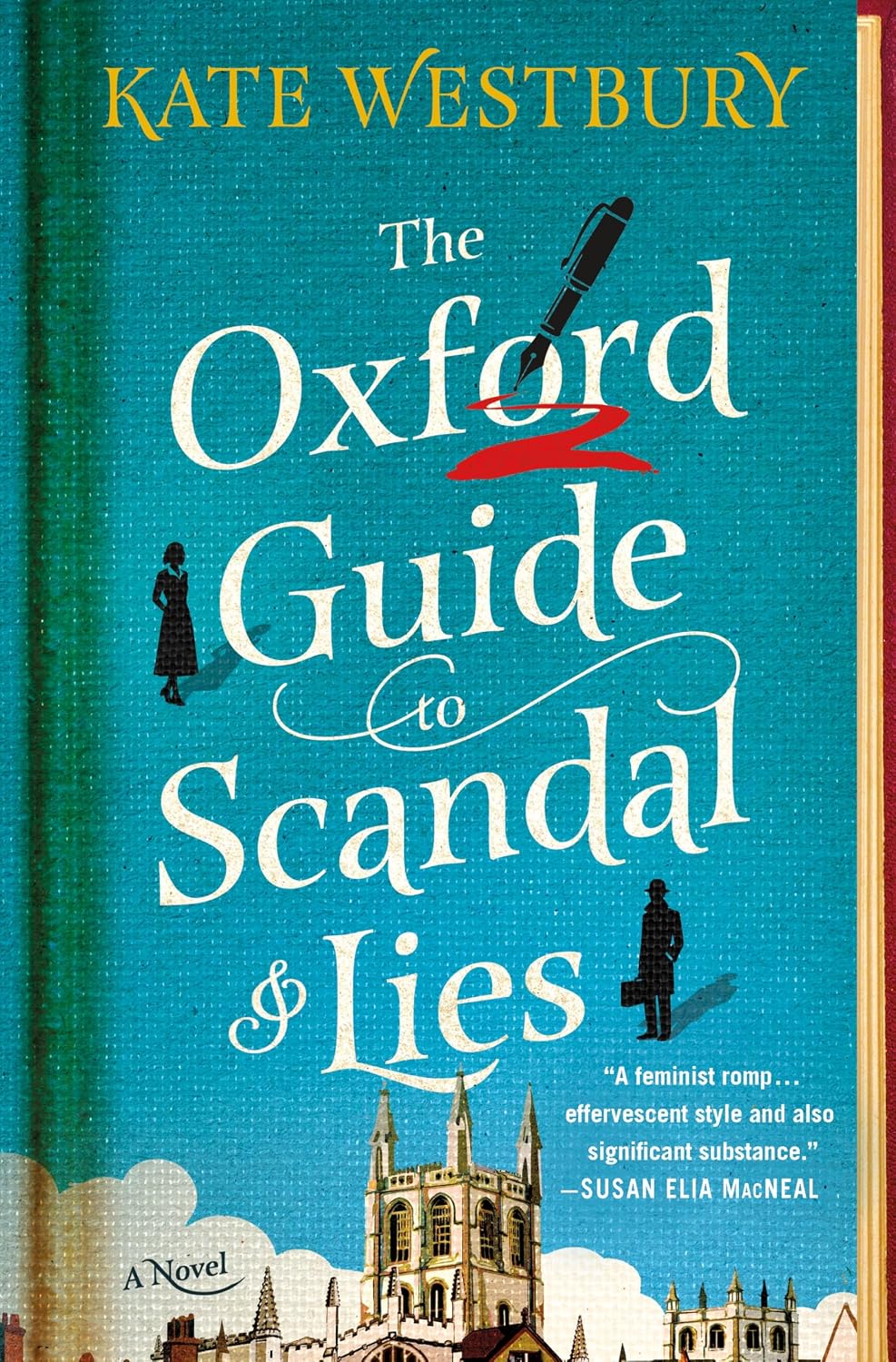 Set in Oxford in 1951, this delightful first novel features an opposites attract type couple, Ginevra Bishop and Simon Braithwaite. Bishop, Gin to her friends, is a well connected redhead familiar with the upper crust boys who have joined her at Oxford. Simon Braithwaite, on the other hand, is a clever working-class veteran damaged by the war who has come to the campus in order to escape his ghosts (what we would now recognize as PTSD).
At that time, the after effects of the war remained inescapable, with both the student body and the faculty staffed with war veterans, all of them struggling with their own nightmare memories. As the book opens, Gin, searching for a study spot in the crowded Bodleian library, asks her favorite librarian, Tolliver, for a tip, and ends up next to a hostile and inhospitable Simon. Meeting cute, the two glare at one another over the top of their research tomes, and so far, so cozy. It’s only when Simon and Gin discover the body of sweet old Tolliver at the moment he’s drawing his final breath that things take a slightly darker turn. It’s murder, and the pair are soon recruited by British intelligence.
Tolliver had apparently been hunting Russian spies, leaving behind a list of suspects that includes both Dons and students. The mysterious “Rook” asks Simon and Gin to do their bit by working undercover and surveilling the people appearing on that list. The nexus of the suspicious activity appears to be a used bookstore, setting the scene for their first stakeout. There, their different personalities are on full display, with impulsive Gin all eager and committed, while Simon, who had done some intelligence work in France, remains far more measured and cautious. Of course, between the two, they’re able to create a happy medium.
This debut book is a deft untangling of many different threads, with its author confidently presenting each an array of credible suspects, as well as a dandy red herring or two. The whole story is presented in a very golden age style, truly transporting the reader back to the Oxford of the fifties. As some of the earliest women to work their way through Oxford, Gin and her friends have different concerns than most of their male counterparts, who are obsessed with class and money.
The most upper crust men have a social club that also seems suspicious, and one of their members keeps claiming to be engaged to Gin. The two have family members familiar with each other and there seems to be an understanding between the two sets of parents that Gin is not privy to. This phoney engagement puts Simon off for much of the book, and both he and Gin are often distracted by their own individual concerns, Simon by his war memories and a growing attraction to Gin, and Gin by family concerns and ructions, as well as an engagement she in no way wants any part of.
The delineation of class, of the ranks of ambitious scholars, and the place of women on campus and in the world are all handled with the touch of a much more experienced writer. Beyond the dandy espionage plot, it’s the very strong personalities and well delineated characters of Gin and Simon that really power the narrative. This looks to be the first book in a series, and I’m already eager for the second one. — Robin Agnew