Japantown #3
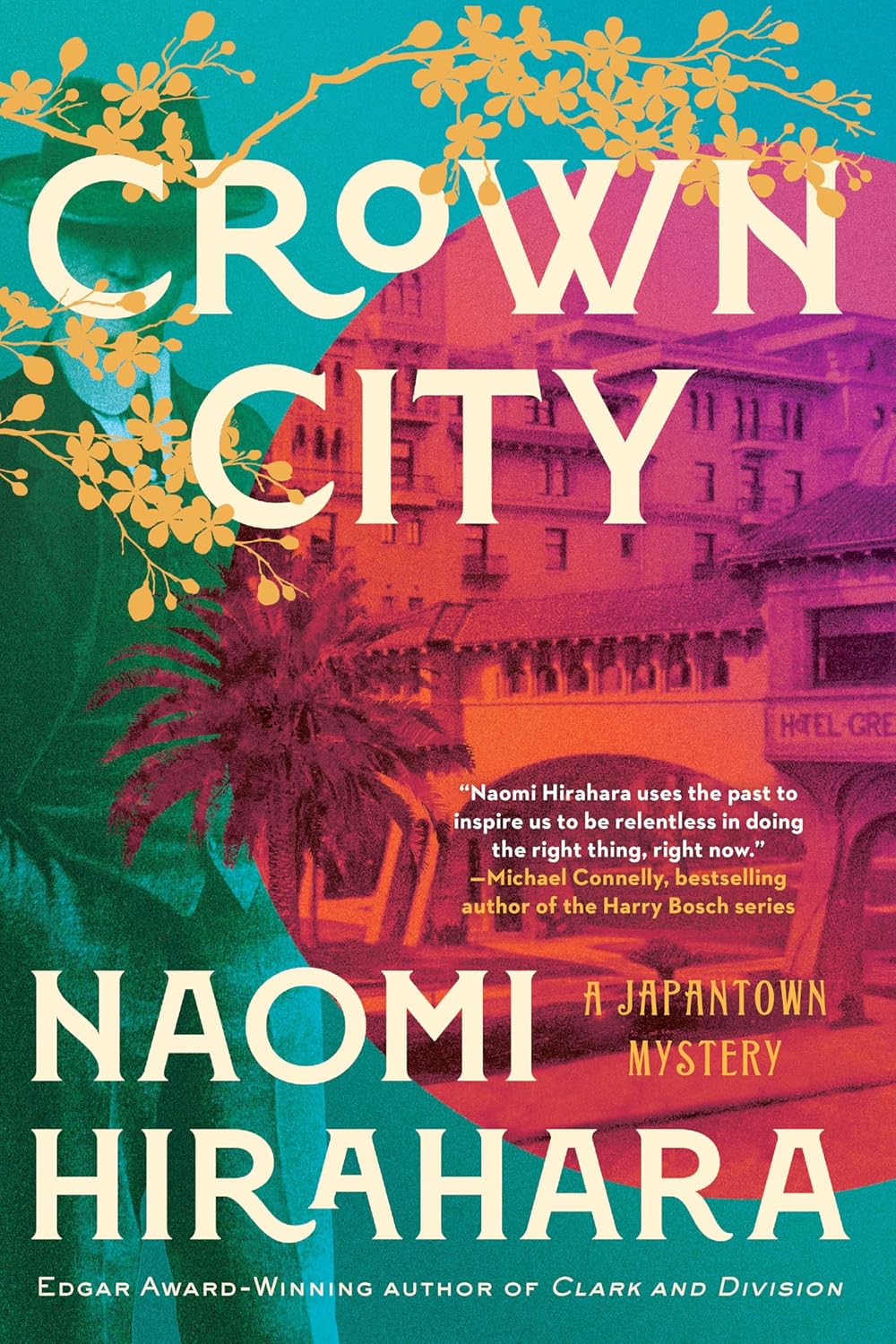 I’ve enjoyed all the books in this series, but in some ways I would say Naomi Hirahara is almost more of an historian than a mystery writer, evidenced by this latest installment of this extremely enjoyable series. There is in fact a mystery in Crown City, but the time period and setting are the real stars of the show. Another attraction is main character, Ryui Wada, an accomplished carpenter who emigrated to America from Yokohama in 1903 after the death of his father. Although he has a job waiting for him, he’s just 18, speaks little English, and has a lot to learn, something that’s brought home when he discovers Pasadena, the “Crown City,” a place that astonishes, fascinates and horrifies.
Quickly given the name “Louie” by those who can’t pronounce the real one, he’s lodged in a rooming house with an assortment of other workers, some Japanese, some not. His work is the only place where he feels comfortable – the wood joints he assembles join together seamlessly, but he has trouble connecting with the strange food and the rude familiarity of his Western cohorts.
His roommate is a Japanese photographer, Jack, whose previous roommate, Eddie, has vanished, an absence that hangs over the narrative. Quickly assigned to work a fancy party, called the “Cherry Blossom Party” as it celebrates all things Japanese, he accepts, despite being puzzled by the theme. As he’s taking out the kitchen trash at the end of the day he’s assaulted by a bicyclist wearing a mask who knocks him over and leaves a note saying “Die Jap.” He’s so unsettled he hurries home, forgoing his pay, and never telling anyone.
The artist who hosted the party, Toshio Aoki, approaches him a few days later, telling him that he wants Jack and Louie to try and find a stolen painting of his. The two anoint themselves detectives and set out to crack the case, as well as attempting to discover the whereabouts of the missing Eddie. Their earnest efforts land them in some very unsavory spots and perilous situations, evidenced by Eddie’s body turning up mid-investigation.
One of their housemates is arrested for shooting an arrow at someone during an archery competition (it only takes out the man’s hat), but because the competitors are wealthy, the police arrest a likely and convenient suspect and toss him in jail. It’s kind of an outdoor hut, and Louise takes to visiting his incarcerated neighbor and sharing his food. He also has an altercation with Jack, leaves the rooming house and taking up residence on a sofa in Aoki’s studio.
And that’s just the main plot. What can’t be conveyed in a short review is the depth of Hirahara’s depiction of 1903 Pasadena, of how the Japanese workers fit into the city, and the irony of their culture being celebrated while they themselves suffer hateful prejudice. She also sketches in different cultural touchstones and future icons, such as a certain Mr. Vroman (founder of the famous Vroman’s Bookstore), a collector of netsuke. I kept my phone out to look up the landmarks Hirahara describes and the influence of Japanese culture on the architecture of the West was easy to see.
I also grew fond of Ryui, who comes to life on the page as not just a poor immigrant with no family or connections, but also as a skilled carpenter, a man looking for love, trying to figure out how western relationships function, and simply looking for a path forward. This is certainly an identity story, not just Ryui’s but of early Pasadena as well. A deft storyteller, Hirahara frames her narrative with letters between Ryui’s children written after the events of the book. She creates a narrative that’s both a bittersweet race through Ryui’s life and a loving look at the early years of the city of Pasadena. — Robin Agnew