Perveen Mistry #5
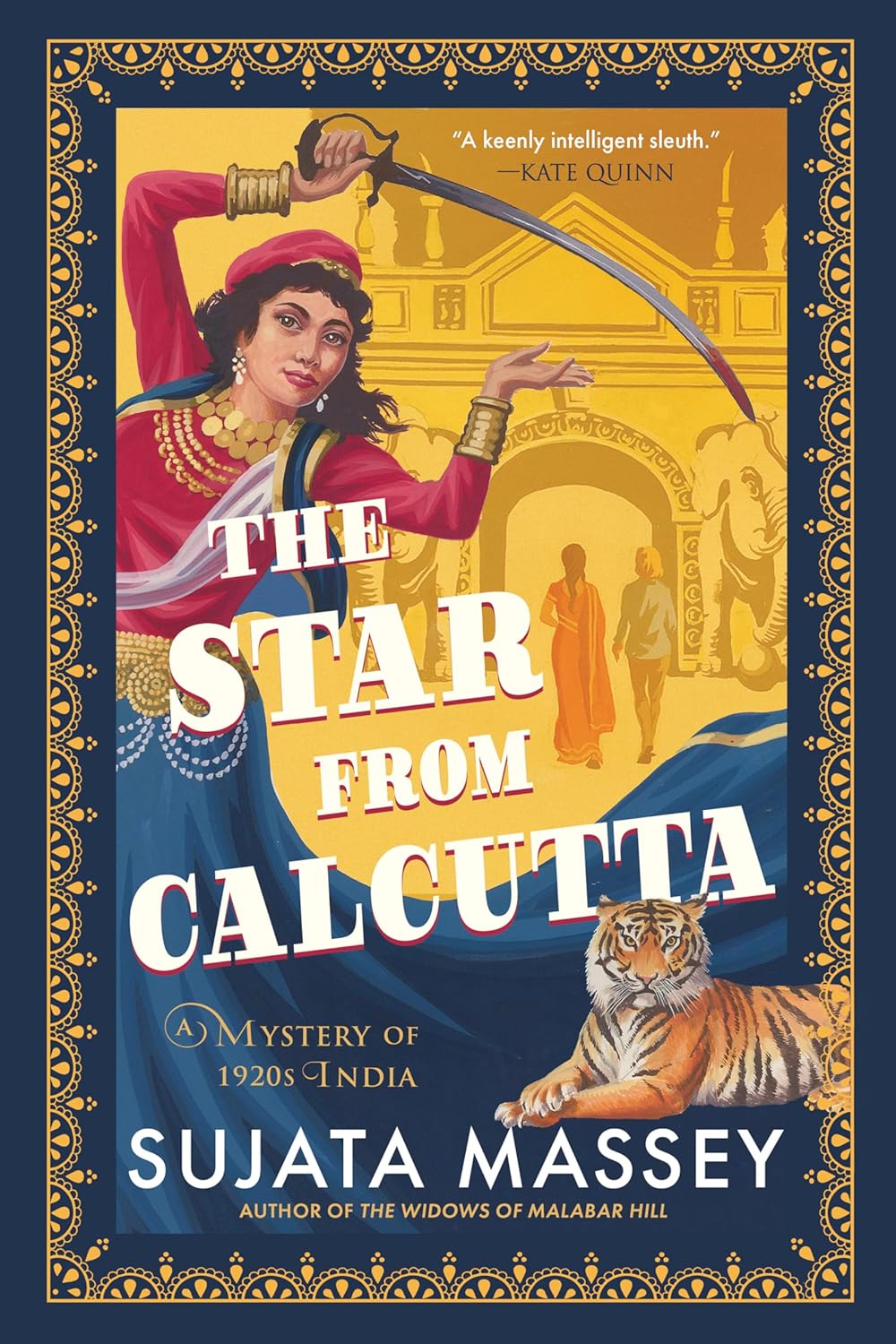 One of the best written and smartest historical series being created these days are the books by Sujata Massey featuring female lawyer Perveen Mistry, who navigates the turbulent waters of India in the twenties. While never giving way to scolding polemic, the issues Perveen experiences become an organic part of the story, allowing Massey to highlight women’s issues in a way that resonates with the reader of today.
More of a straight up traditional mystery than some other instalments but no less enjoyable for it, The Star from Calcutta opens, with Perveen and her father – whose firm she works for – meeting with a movie producer named Subhas. He’s worried that his most bankable star (and wife) is in breach of contract and asks them to see what they can do to resolve the issue, inviting Perveen to a party and screening at his home slash movie studio to see what she can uncover.
Although her father is uninterested in the cinema, Perveen couldn’t be more excited, particularly at the prospect of meeting Subhas’s wife, the movie star Rochana. She invites a fellow big-time fan, Alice, a friend since university, to accompany her. Alice has relocated to Bombay, but unfortunately so has her snooty Anglo-Indian family, who find their relationship socially suspect.
Nevertheless, the women head to the party where, to Perveen’s puzzlement, Alice and Rochana seem to bond immediately. However, Perveen is distracted by a request from their host to take a close look at another guest, a rude man who’s a film censor. After getting an earful about him from the bartender she’s less than sympathetic when finally able to talk to him in person.
The film is finally screened, as, to Perveen’s dismay, Alice’s drunkenness progresses as well as the mutual, sudden and mysterious attachment between her and the movie star. Eventually both women press Perveen to spend the night as they claim Alice’s dog, Diana, will be needed for a film test first thing in the morning. Reluctantly, Perveen agrees, leaving their company for bed, but not before sending her driver home with the signed legal contract and payment from Subhas.
When she wakes up, she can’t find Alice, though she does discover dog Diana, who leads her to a small zoo on the property where she finds the film censor’s body. This introduces the most traditional element in this traditionally told tale, the one in which the most unpleasant person, the character everyone hates and has a motive to kill, is taken off the board early. This frees the rest of the tale to concern itself not just with the complicated mystery, but also with Alice and Perveen’s longstanding but now equally complicated friendship, strained and endangered by miscommunication and misunderstanding.
That friendship becomes the heart of the book. Massey is incredibly gifted at portraying emotional relationships, a gift that doesn’t fail her here. While Perveen has her own secret and socially unacceptable relationship with Colin (first encountered in The Satapur Moonstone), Alice’s same sex inclinations are even more taboo. Her oblivious mother constantly throws men her way with no success, as Alice makes her own way as a dean at a local college. Certainly both she and Perveen would have been anomalies in that place and time, but Massey makes them seem absolutely at home exactly where they find themselves.
The resolution of the crime is entangled with Perveen’s friendship with Alice, allowing her to take another step in her growth as a human being as she learns both the value and the limitations of intimate friendship. Of course, there’s also the entertaining portrait of Bollywood in its infancy as it struggles to break free of the Western filmmaking monopoly. With her expert use of these and many other elements, Massey is able, as usual, to offer grateful readers like me a deeply intelligent and satisfying read. — Robin Agnew