Harriet Morrow # 2
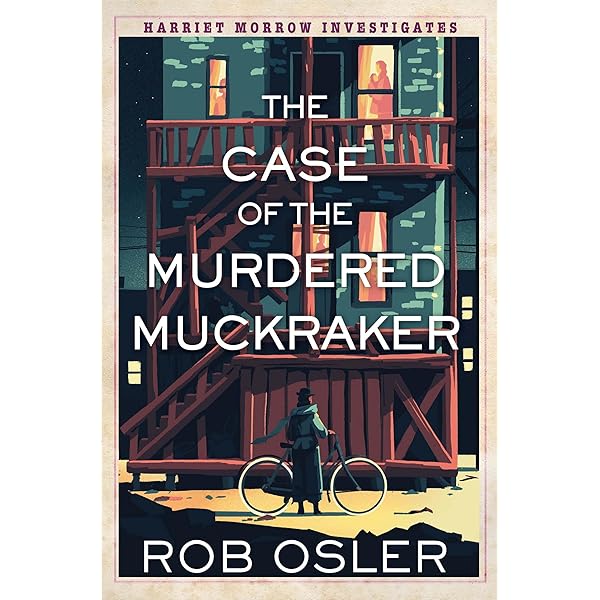 It’s rare that I like the encore more than the first book in a series, but Rob Osler has pulled it off with the second in his series about Harriet Morrow, a fledgling private detective in turn of the century Chicago. I liked the first book very much, but in this one, Osler delves even deeper and more expansively into Harriet’s character. She’s an LGBTQ woman at a time when such things hardly had a name and she’s not sure what to do about it, though she enjoys wearing men’s clothes does seem to have a potential girlfriend in mind. Unbelievably, in her era cross dressing was an offense that could bring a fine or jail time or both, so she mostly confines herself to wearing men’s more comfortable shoes and practical hats. She vastly prefers trousers for bicycling around town (and who can blame her?) but is forced to make do.
She’s young, and as the only woman in her agency, still feeling her way through an investigation, relying on a sympathetic colleague for advice. The pool of female secretaries seems to resent the fact that a woman has risen above them to her position, but Harriet remains persistent, powering through many uncomfortable or dangerous situations, resembling another fearless fictional Chicago investigator of our time, V.I. Warshawski, who also keeps working despite discomfort and injury.
Since their parents are both dead, Harriet lives with her 16 year old brother, and has found a spiritual auntie of sorts in the cranky Pearl, who she met in the first book (The Case of the Missing Maid). Pearl, while difficult with many, is fond of Harriet and her brother, Aubrey, and they have dinner most Sunday nights at her house.
The case Harriet takes on in this novel is just as the title describes – a muckraking journalist has been found murdered in a tenement, and the police have simply arrested the woman who lived in the closest apartment, taking her children away to orphanages in the bargain. Harriet feels two strong motivations, wanting to find the killer as well as getting the woman out of jail and reuniting her with her children.
She goes undercover at a local settlement house (what we might think of as a homeless shelter today), which allows her to go to the tenement where the murder took place as their representative. All that’s there is grinding, hopeless poverty and unhelpful neighbors who can only expect a morsel and a bed to sleep in at the end of the day.
Determined, Harriet peels away the layers of the tenant’s lives, as well as digging into some of the same corrupt politics the muckraker was looking into. Being Chicago, where crooked aldermen seem to have been the norm time out of mind, there’s plenty to investigate. She’s also exposed to the various progressive movements around the city as she continues her investigation.
The skillful Osler brings bygone Chicago to vivid life, examining a slice of time and a group of people not often portrayed in mystery fiction. He writes with sensitivity about Harriet’s quest for identity, to a point where I shed a tear or two as I read. Not to mention the fact that the plot is pretty great too, complex without being confusing, and dealing with the issues of the time, all the while illuminating the story with his wonderfully delineated characters, all providing a great second step in this truly remarkable series. — Robin Agnew