Sparks & Bainbridge #8
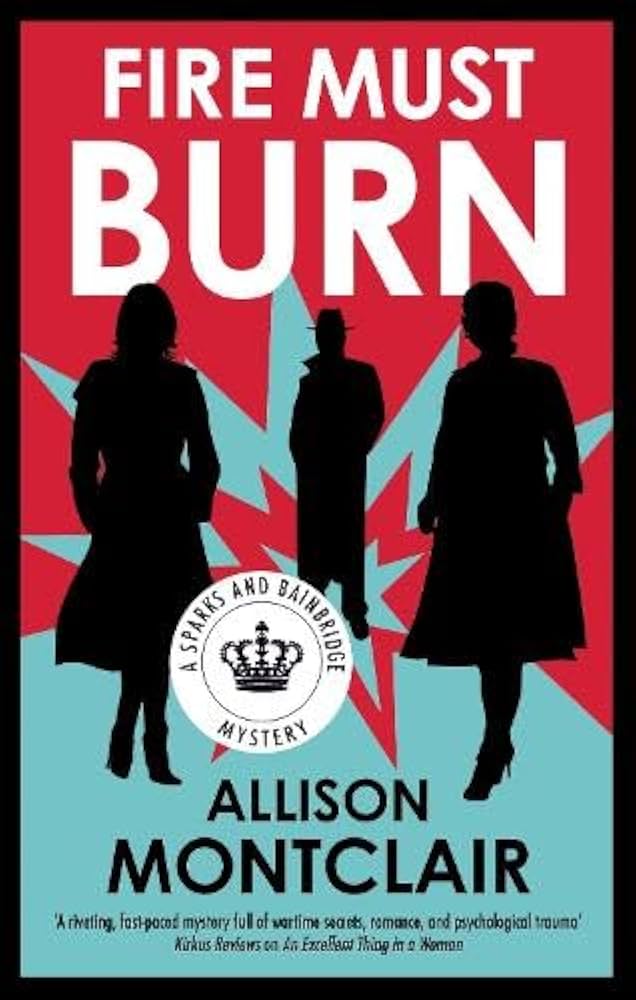 I just love this series. It has two wonderful main characters, spectacular plotting, and, in post war London, a fascinating time period and setting, making it simply one of the best contemporary traditional detective series out there. In this outing, our two heroines, Iris Sparks and Gwen Bainbridge, are tasked by English government intelligence to assign a woman through their marriage bureau (The Right Sort) to act as an agent as a means to discover if a certain diplomatic employee is loyal to their government or perhaps another.
The suspect, Tony Danforth, was an old classmate and friend of Iris’s at Oxford. Naturally, she has mixed feelings about this assignment, but owes a debt to the intelligence corps that she and Gwen must pay. As she renews her relationship with Tony, who has been out of the country for some time, her doubts increase, escalating further when she and Gwen meet the agent intended for the project.
Iris doesn’t approve of the brash young blonde agent, but her introduction to Tony is set up anyway, and the first date starts well, only to end very badly. The investigation takes an unexpected swerve into Iris’ past, zeroing in on a terrible incident back in the 30s during a house party at which she and Tony were guests. They still aren’t quite sure what happened back then, only that the mysterious incident was followed by an equally mysterious suicide.
As Gwen and Iris search for a solution, they can never rule out hostile Soviet involvement, but there’s also that incident from the past, and they untangle family threads, attempting to find some kind of solution. Montclair spools out her story brilliantly, capitalizing on the pair’s smarts and innate bravery in the face of danger, keeping the reader in the dark about the motives of everybody else.
What makes the fabric even more complex are the divided loyalties involved – to betray the government or an old friend – and the question of whether it will even be possible to discover the truth of the matter. The solution couldn’t be more ingenious and unexpected, worthy of Ngaio Marsh herself. Montclair conducts it all beautifully, composing variations of her own on the motifs of the golden age, while still developing and deepening her series characters. In Fire Must Burn she has produced a completely masterful work. — Robin Agnew