Author Interview: Emily Winslow
Jamie interviewed Emily Winslow, author of Jane Doe January. Her powerful answers about her rape case are included here.
 Q: You maintained your desire for justice for twenty years after your rape. Was there any point where you thought the official case would progress any further?
A: I was always hopeful. I was frustrated that it wasn’t happening yet, but I always imagined that the case would move forward at some point in the future. Right up until the end, I believed that we would get all the way to conviction.
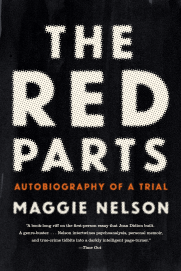 I recently read two great true crime narratives, The Red Parts: Autobiography of a Trial by Maggie Nelson and Jane Doe January: My Twenty Year Search For Truth and Justice by Emily Winslow, that started me thinking about the evolving way we look at crime. Both books demonstrate the seismic effect that advances in DNA testing have had on both prosecuting and narrating crime stories.
 The first chapter of this novel is a master class on how to kick off a gripping thriller. We meet an unnamed woman as she sneaks out of—somewhere?—we just find out it’s very cold and she has to be quiet. We join her on her escape and ultimate chase and death, caring about her more and more the more we read. In indelible strokes and in a short amount of space—only 9 pages—Castillo introduces her story conflict, brings us a character we care about and are invested in, and establishes a vivid setting. Really, if you want to write a gripping crime novel, this would be a great chapter to check out as an example. But if you’re a reader, like most of us, you’ll simply want to find out what’s next.
 If you want a compelling reading experience, just pick up a David Bell book. Reading the first page can be like leaning over a suspense generating machine—the gears of the story will grab any loose time you have and draw you in irresistibly. Take, for instance, the first few lines of his latest, Since She Went Away: