Jussi Adler-Olsen: The Absent One

The Absent One, Jussi Adler-Olsen’s second novel in his gripping Department Q series, creates one of the more interesting female characters in recent fiction.  While Kimmie, the “absent one” of the title, is certainly not entirely sympathetic, as Adler-Olsen draws the reader deeper into her world there are sympathetic glimmers.  Explanations of her behavior.  And a portrayal of an exceptionally strong woman who ultimately chooses to do the right thing.
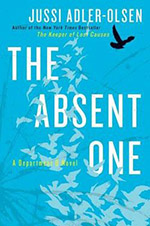
AbsentOneWhile that is part of this novel, this is also, like the first novel, a terrific thriller that will keep any reader glued to the page.  Adler-Olsen has set up his two main characters, Carl and Assad, as a perfect yin and yang.  They are the reliable and comfortable center of the novels, and in this one he’s added a third party, Rose, greeted by Carl as grumpily as he initially greeted Assad.  Despite Rose’s alleged assignment of assembling new desks for their workspace, she manages to prove to Carl that she has plenty to offer. read more
Marco Vichi: Death and the Olive Grove

“The story had something at once horrifying and sweet about it, something he had difficulty understanding.” – from Death and the Olive Grove

There are a few poets who are also mystery writers – Georges Simenon, Andrea Camilleri, Colin Cotterill, Matt Beynon Rees, Louise Penny, Karin Fossom – add to that short list Marco Vichi.  I mean poets in a spiritual sense (though Fossom is actually one).  Vichi’s blend of an almost delicate prose style with a gripping story, as well as a wider look at life, places him in that rarified company.  What makes this book special is that it’s thought provoking as well as hard to put down. read more

Louise Penny: How the Light Gets In

Louise Penny has always possessed a “voice”, a recognizable prose style and way of telling a story, but as her career has progressed you can feel the originality and power of her voice increasing.  She’s exploring deeply personal themes and rigorously examining her characters from the inside out,  giving them a little (or big) shake. While Gamache has some mystery left (and hence some of his own mythic power) there’s lots we’ve learned about him as readers since the publication of Still Life. read more

Simone St. James: An Inquiry into Love and Death

This is a fun mix of romance, mystery and a cracking good ghost story.  I enjoyed the fact that the author unabashedly buys into the whole ghost paradigm – there’s not an ounce of irony here, which serves to make her ghost far more scary. Set just after WWI, the main character is a young woman at Somerville College, Oxford, part of an illustrious group of women who were the first to get a university education at Oxford.  In real life their numbers included Dorothy L. Sayers and Vera Brittain, author of the classic memoir of WWI, Testament of Youth. read more

Chris Pavone: The Expats

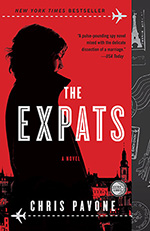
This novel has garnered lots of praise and attention, as well as winning the Edgar for Best First Novel.  I can say it was a well-deserved award – this is a very original and quirky novel that is more than worthy of all the attention.  It’s not much like any other novel I’ve ever read – it has spy elements, international elements, and a strong domestic element that brings what is primarily a spy thriller into the more human realm.  It made me like it much more.

expats_coverI’m not big on spy thrillers and they haven’t been a big part of the genre for awhile – though it’s making a comeback, certainly, with the success of authors like Vince Flynn or the slyly imaginative Mike Lawson.  Pavone brings yet another take. read more

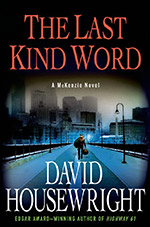
David Housewright: The Last Kind Word

There are seriously few writers who can beat David Housewright for sheer storytelling power.  His books hit the ground running and don’t let up until the last page.  This is the latest Rushmore “Mac” MacKenzie novel, and Housewright has taken a slightly new tack.  Mac is undercover as desperate criminal Dyson  in order to help catch a band of robbers and more importantly, the gunrunners who are supplying them with weapons at the Canadian border.

thelastkindwordThe opening chapter is pure, classic Housewright.  The only other author who can match his opening chapter skills is Barbara D’Amato, who has several first chapters that remain my favorites of all time,  her ultimate being the baby crawling across Chicago’s Dan Ryan expressway in 2010’s Other Eyes. read more

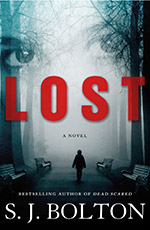
S.J. Bolton: Lost

Bolton’s reputation and popularity has been a slow burn, but she’s catching on more and more with readers and if you like her – boy – do you like her.  Lately she’s focused on a series rather than the amazing stand alone novels which began her career (Sacrifice, Awakening), but her series is wonderful as well.  Her Lacey Flint books began with the outstanding Jack the Ripper thriller, Now You See Me, and she followed it up with the ultra creepy Dead Scared.

lost-sjbWell, she’s put Lacey through the wringer and this novel seems to be the one where she’s trying to set Lacey back to rights.  It’s certainly original to have the main series character be both so troubled and so actually physically tormented just by way of doing her job.  Lacey is part of the police force, ending up on a big case in the first novel by virtue of having a victim literally die in her arms; in the second, she’s undercover, and becomes the victim herself; in the third, she’s literally, as the title suggests, “lost.”  She’s not the only lost one here, of course, but it becomes a theme of the book. read more

Steve Ulfelder: Purgatory Chasm

When is a P.I. not a P.I.?  Today’s rash of younger male writers are taking a look at that question, and they all have a different answer.  Tim O’Brien has a teacher; Brad Parks, a reporter.  Steve Ulfelder has an auto mechanic AA member whose main motive is revenge.  Really, though, the motives of the P.I. haven’t changed:  to a man, the new P.I.s  are interested in putting things right simply because it’s the right thing to do.  It looks like what’s surviving from the long standing P.I. trope is not the private eye aspect itself, but the white knight aspect.  That’s something I can get behind. read more

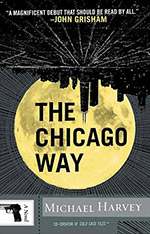
Michael Harvey: The Chicago Way

This is a stunning debut novel.  Featuring Chicago P.I. Michael Kelly, Harvey manages to take the very tired old formula, initiated by Raymond Chandler, and somehow make it fresh and new.  His P.I. is a tough Irish ex-cop, with an educated heart of gold.  He reads Aeschylus in his spare time.  The vengeful, bloodthirsty stories told by the ancient Greeks have plenty of relevance in Kelly’s 21st century life.

chicago-wayWe’re introduced to Kelly in the most classic of ways: his old partner walks into his office and asks for his help.  Neither the P.I. or the cop code of honor allows not helping out an old partner, and Kelly is all in.  The story his old buddy, Gibbons, has to tell is horrible and gripping enough to get anyone’s attention.  Gibbons has always been haunted by the brutal rape of a young woman who was stabbed while it happened and left for dead.  She’s reached out to him and asked for his help in finding her rapist, who was never caught. Gibbons had been talked into forgetting the rape by his superiors, but a letter from the victim is a whole other story.  He wants someone from outside the department to help. read more

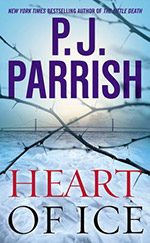
P.J. Parrish: Heart of Ice

P.J. Parrish – or the sisters who write as P.J. Parrish – are paperback writers in the very best sense of the word.  They deliver a good story, well told, with reliable characters and settings, asking only that their readers enjoy the journey they deliver. Almost always, they fulfill this promise.  With their new novel, set on Mackinac Island, I was holding my opinion in reserve.

heartoficeFull disclosure:  I grew up on Mackinac Island, so I wasn’t so sure they could get it right, having read other novels set on the island that had a misfire or two (or more).  I was at first cautious but then more and more delighted as they really seemed to “get” the island (and it may help that one of the sisters lives in nearby Petoskey), but after awhile the story they were telling was simply so good, the island details really didn’t matter. read more